Nintendo's Game Software Sales Were 60.7% Digital in Six Months
Most of the rise comes from downloading games that are also sold in boxes, Nintendo's half-year report shows. The latest quarter slipped a little.
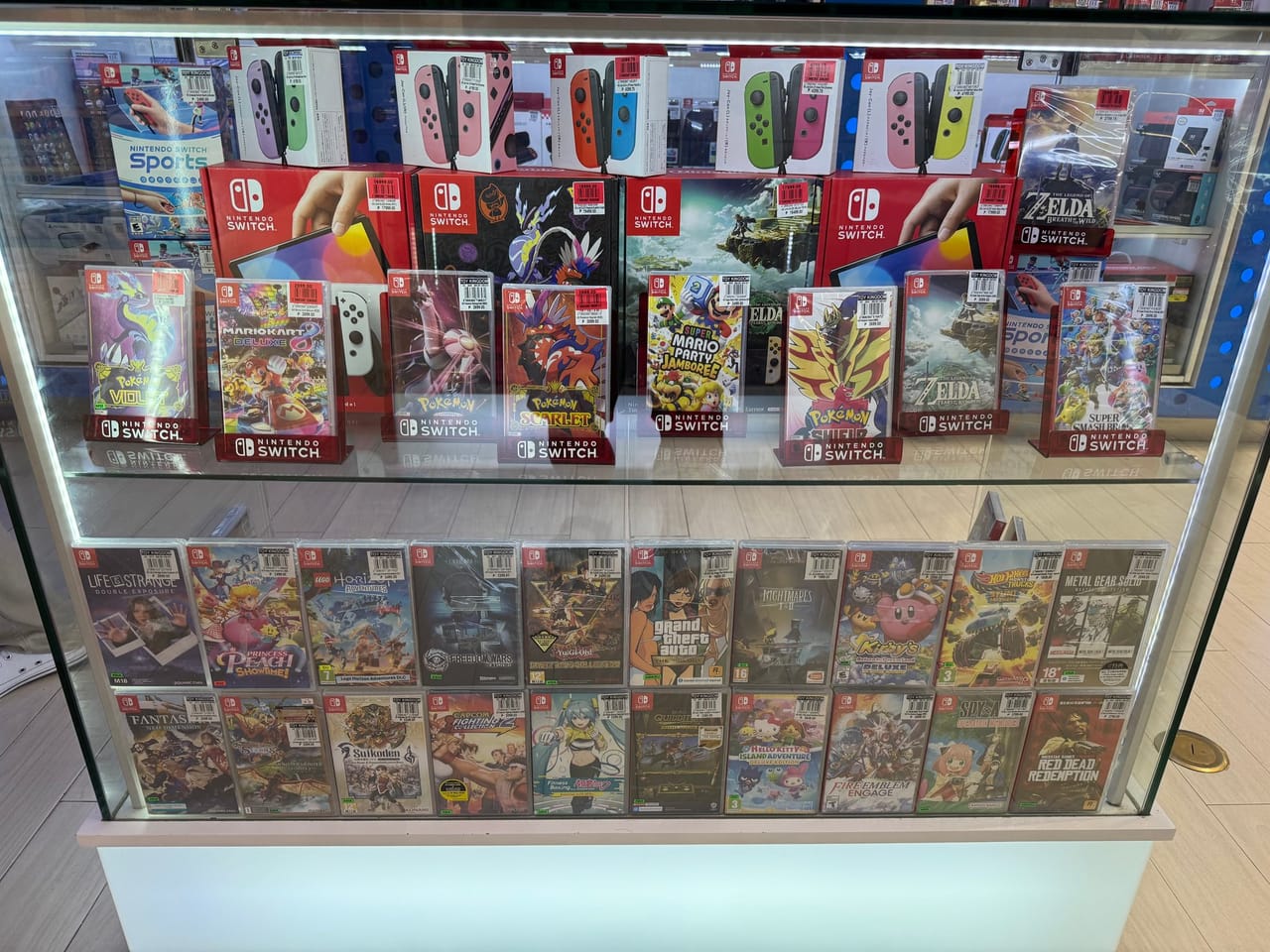
Of every 100 yen Nintendo took in from game software for its consoles between April and September, about 61 came from digital sales. A year earlier it was 54.5. The company published the figures on 5 November in its results for the first half of its financial year.
Digital sales rose 60.5%, to 249.6 billion yen. Nintendo counts four things as digital: downloadable versions of games that are also sold in boxes, games that exist only as downloads, add-on content and its Nintendo Switch Online subscription. Its share is measured against all software sold for its consoles, so the rest, a little under 40%, is software sold in packaged form.
Most of the growth is boxed games, downloaded
The telling detail is what sits inside the digital total. Downloadable versions of games that also come in boxes made up 59.2% of digital sales this half-year, up from 46.3% a year ago. Nintendo's results release says the rise was mainly due to this increase, and its slides also name the continued weakness of the yen.
So the shift is less about new kinds of products than about how people buy the same ones: the game that is on a shop shelf is also on the download page.
A softer second quarter
The half-year share hides a small step back. In April to June, digital was 61.5% of software sales. In July to September it was 59.8%, and digital sales fell from 132.7 billion yen to 116.9 billion. That is still well above the 51.2% of the same quarter a year before. The share has risen and fallen from quarter to quarter before, so one quarter settles little.
A smaller console year
The wider results show a company selling fewer consoles but earning more. Switch 2 hardware sales were 6.49 million units in the half-year, down 37.4% from 10.36 million a year before. Software for the console sold 24.49 million units. Net sales fell 12.1%, yet operating profit rose 49.1%.
Nintendo gives two reasons for the profit: steady software sales that made up a larger share of the total, and a first-quarter refund of American import tariffs that had previously been booked as a cost of sales. It left its forecast for the full year unchanged. As of 30 September, the console had sold 26.35 million units worldwide.
One more catch: software sold together with a console, such as Mario Kart World, counts as hardware revenue, not as software or digital sales.
What the figures leave out
Nintendo's results documents say nothing about cartridges, and they do not mention game-key cards. These are cards that work as a key to a game but do not hold the game itself, which has to be downloaded. The figures cannot show how many boxed games sold are such cards, so they say nothing about whether physical releases are changing in shape.
Another Bitpulse story reported that Macronix, a Taiwanese chipmaker, is phasing out the ROM chips that store games on Switch cards and that it had sold mainly to Nintendo. An analyst in that story said the company is not Nintendo's only cartridge supplier, so physical games will likely carry on for some time, and he suggested game-key cards could become more common. That story cited a digital share of 61.5% for April to June. It is the same first-quarter figure that appears in Nintendo's new report.
Where the line sits now
The six-month result puts Nintendo further from the shop shelf than it was a year ago, but not all the way. Close to four of every ten yen of console software revenue still comes from boxed software, and the digital share slipped in the latest quarter. Later reports will show whether that dip was a pause or a trend.