A Grave Among a Theater's Seats in Bursa Puzzles Archaeologists
The ancient city of Apollonia had a cemetery of its own, which is what makes a nearly 2,000-year-old cremation grave in its theater so strange. The excavation director has a cautious idea, and a lot of digging is left.
In the ancient world the dead were usually buried in cemeteries outside the city. Apollonia ad Rhyndacum, in what is now Bursa, northwestern Türkiye, had its own, by the city entrance. So archaeologists did not expect to find a grave among the seats of its theater.
That is what the excavation team reported in late October. The tomb lies in the northern part of the lower seating area. It dates to the first century AD, so it is nearly 2,000 years old. The burial chamber was built of mud brick and covered with a roof of terracotta tiles. The person was cremated, and the fire left little behind. Excavation director Prof. Derya Şahin of Bursa Uludağ University said the bones cannot even show how many people were buried there.
A grave in the wrong place
The grave is built much like the tombs in the city's cemetery. Yet it was placed where thousands of people once sat to watch performances. Şahin asked what a tomb was doing in the theater when the city already had a burial ground. Her own answer is cautious. She said such a grave must have had a special meaning, and that it may carry a trace of something sacred or heroic. That is her suggestion, not a finding. The team plans to keep digging, and historical sources also need to be searched for an explanation.
The grave itself offers few clues about who the person was. Because the remains were burned, few objects came out of it, and the team has not said who it thinks the person might have been. With no name and few objects to go on, the setting is the main evidence: a burial in a place built for public gatherings.
Reports published up to November 3, in Turkish local media and on specialist sites, give no answer. They say the reason for the burial is still open.
One detail adds a little to the puzzle. A report on the find says the grave dates from a period when the theater was still in use. It was not dug into a ruin.
The theater itself
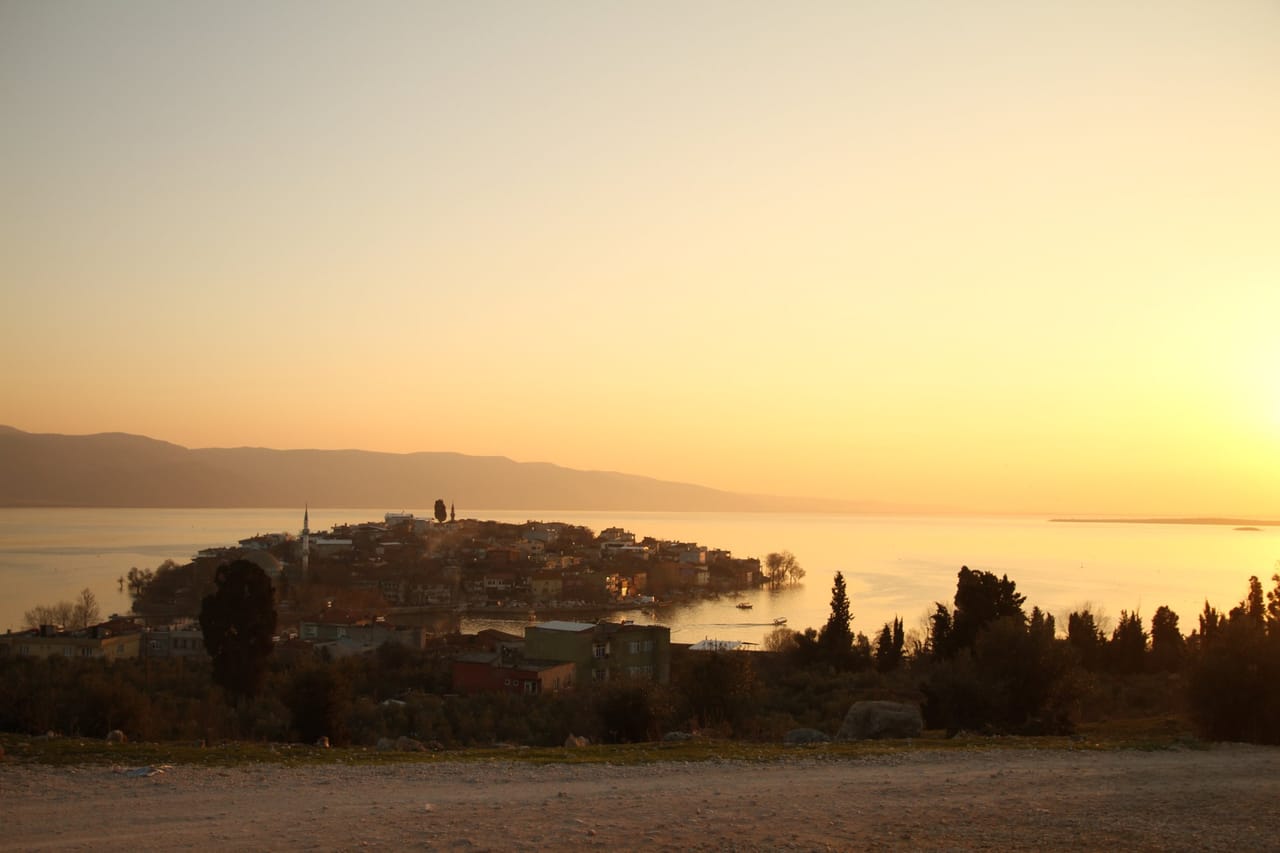
The theater was built in the Hellenistic period on the slope of a hill called Zambaktepe. It looks out over Lake Uluabat. Its estimated capacity is about 5,000 people, and it had VIP sections that resembled private boxes.
Inscriptions suggest that the building reached its final form in the early second century AD. The team believes it had two levels, divided by a walkway about one meter wide. The upper level may have rested on vaults, as in Roman theaters. That part is badly damaged, so little is known about it.
Much more is known about the lower seating. The team has largely finished excavating it, and it has found 42 rows of seats and put them back in their original positions. Last November, a report on the same dig described a name carved into a seat in the highest rows, "Lonidos". Experts suggested it may belong to a prominent priestess. Şahin said a woman's name in a prominent seating area might show she was formally recognized in public life.
Digging down
The excavation began in 2021 under Bursa Uludağ University, with the permission of the Ministry of Culture and Tourism and the support of Nilüfer Municipality. This season's team is small, with two archaeologists, a restorer and workers. They plan to finish by the end of November.
In the northern part of the lower seating, they are now digging down to bedrock. That will show how the building was founded and help them identify the original foundations of the seats. Şahin said the surrounding ground may hide other structures linked to the theater, such as a temple or an old road. She also pointed out the difficulty: Gölyazı has been lived in without a break, so finding well-preserved buildings is harder than at a city that was abandoned.
For now the only account of the find comes from the people who are digging, and no scientific publication on the tomb has been reported. Until the team learns who was buried there, the grave in the seats remains a puzzle.
This article was written by artificial intelligence and may contain mistakes.