Trump Says He Will Likely Meet Xi and Putin at APEC in Shenzhen
Beijing says it is in communication with relevant parties, while a Chinese scholar says an informal exchange is likelier than a formal summit.
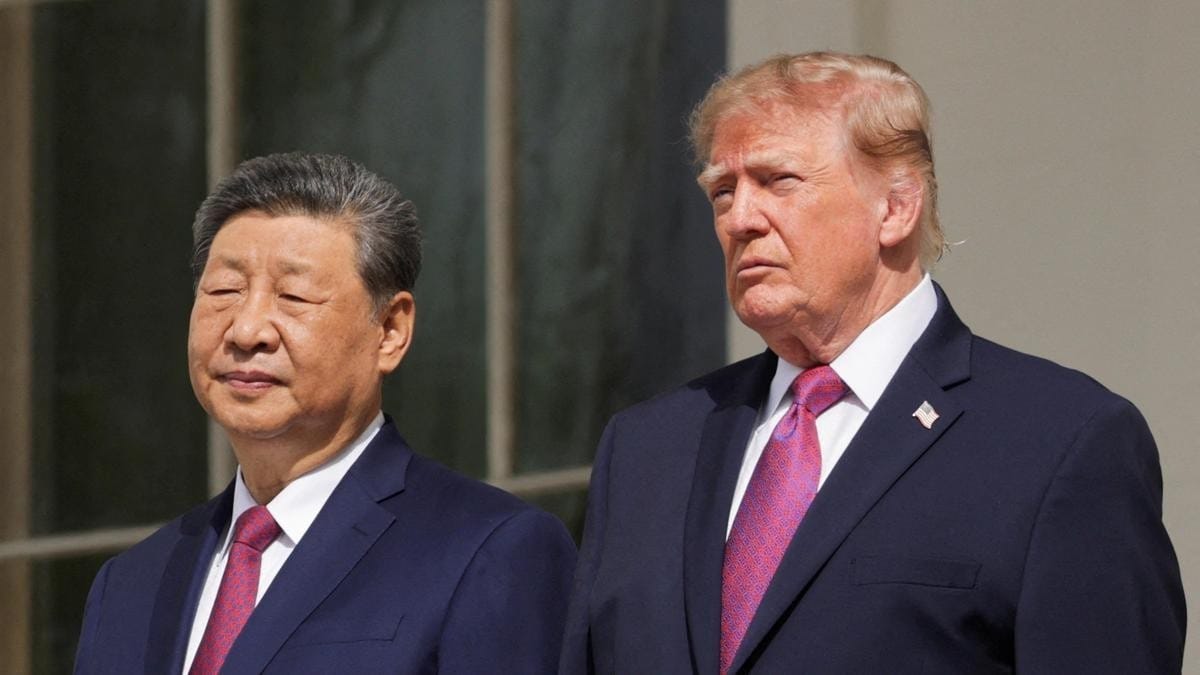
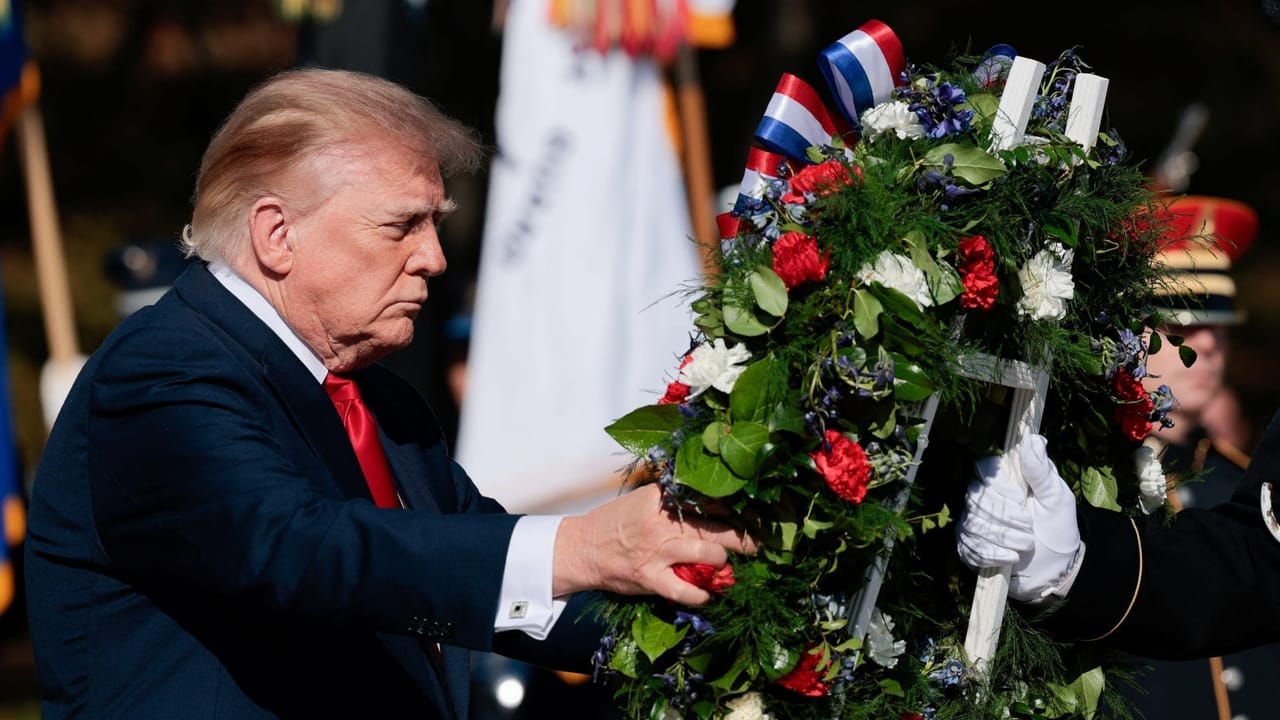
US President Donald Trump has said he will likely meet Chinese President Xi Jinping and Russian President Vladimir Putin next week on the sidelines of the APEC summit in Shenzhen, in what would be a rare meeting of the three leaders.
China did not rule it out. On Monday, November 9, Foreign Ministry spokesperson Guo Jiakun said China was "in communication with relevant parties" about a meeting of the Chinese, Russian and US presidents. Leaders gather in southern China for the summit on November 18 and 19.
Trump spoke to reporters on Sunday, November 8. "One of the meetings will be with President Putin and President Xi, and that'll be interesting," he was quoted as saying. "We're talking a lot of things, including denuclearisation, but we'll be talking a lot of things. We're trying to end the war in Iran." According to The Hindu, he indicated that a deal on the Russia-Ukraine war, the Iran issue and nuclear arms control would be on the agenda.
Four Trump and Xi meetings in one year
Trump and Xi will also meet on their own next week, for the third time this year, after Trump's visit to Beijing in May and Xi's trip to Washington in September. They are due to meet again at the end of the year at the G20 in Miami, which would make four meetings in a year, an unusual number.
Both countries have sought more stability and describe their aim as "a constructive relationship of strategic stability". They have still clashed over trade tariffs, restrictions on semiconductors, rare earths and Taiwan.
A low-profile meeting, one scholar expects
Chinese analysts have played down the significance of a possible three-way summit. Su Liuqiang, a scholar at the Centre for American Studies at the Shanghai Institutes for International Studies, told state media that Russia was the "most enthusiastic" of the three and that an informal exchange was likelier than a formal summit.
Su pointed to "substantial political resistance" in the United States. He said anti-Russia sentiment remains strong there and among European allies, along with opposition to negotiating with Moscow while bypassing Ukraine and Europe.
He also said the three countries have different priorities. In his account, Russia's core concern is negotiations on a ceasefire in Ukraine, the US is interested in that conflict and in non-proliferation, and China supports peace talks while balancing its relations with the US, Russia, Europe and Ukraine.
"In this context, a low-profile trilateral meeting is the more realistic option," he said, adding that practical outcomes could emphasise stabilising global energy supplies.
Su said China prefers "multilateralism" to ideas such as a G2 or a US-China-Russia triumvirate. A meeting would still be significant, he said, because it would suggest increasing interest in "managing that competition and preventing it from escalating or spinning out of control", even as competition between big powers continues to define global geopolitics.