Stephanie Case Is First Woman to Run 100 Miles in Antarctica
The Canadian lawyer finished second overall in 17 hours 31 minutes, in temperatures as low as -35C, the coldest organisers have seen.
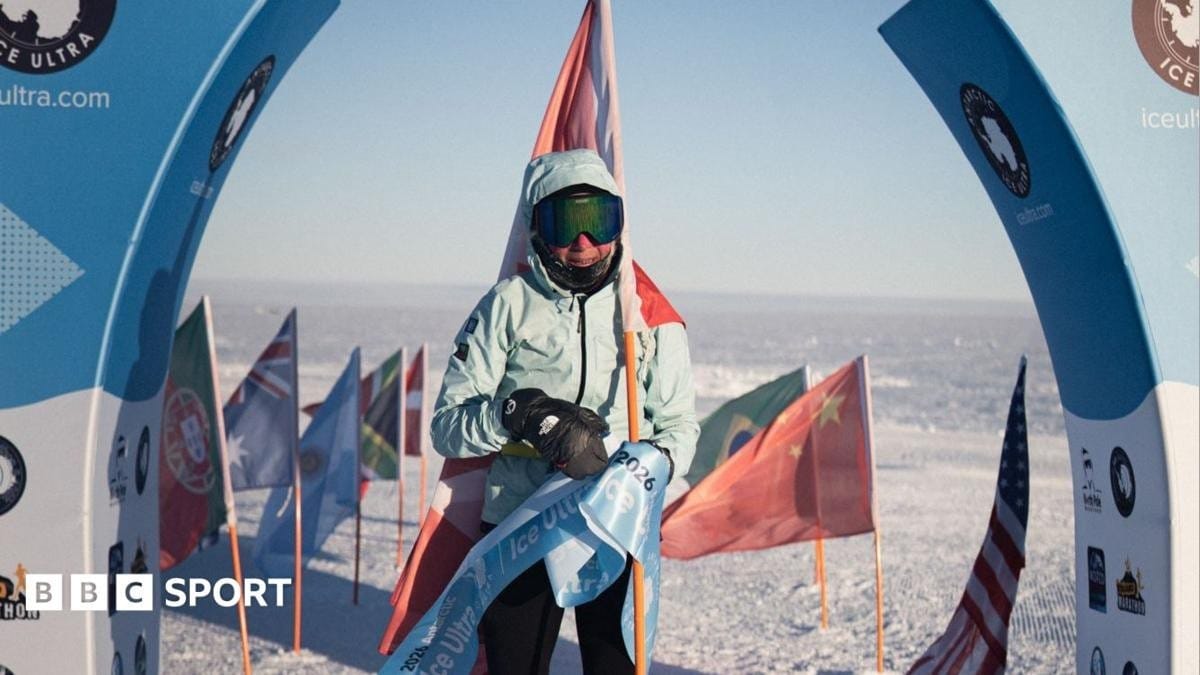
Canadian ultra-runner Stephanie Case has become the first woman to complete a 100-mile race in Antarctica. She finished the Antarctic Ice Ultra in second place overall, in 17 hours 31 minutes and 39 seconds.
The race consists of 38 loops of a 4.2km course in the Schirmacher Oasis in Queen Maud Land, East Antarctica. Case, who is 43, ran alongside penguins in wind and temperatures as low as -35C, the coldest organisers have ever seen. Because of the weather, the start was brought forward to 1am on Sunday.
A race against a world record holder
Case crossed the line 29 minutes after China's Yusheng Ni, who has completed more than 500 ultramarathons. Ni beat his own world record, set last year, by over five and a half hours. Case says she was sometimes 60 seconds or 200 metres behind him. "Whenever he saw me getting close, he would look behind and he would just take off. I think we really pushed each other to get our best performances," she said.
Only four of the eight runners who started the 100-mile race finished. Three women were on the start line, and Case was the only one to complete it. The race had previously only been attempted by men.
Case told BBC Sport the day was as much about survival as performance. "The thing is that you need to run fast, but you need to do it in a way that you don't sweat, because if you sweat, that's a killer. It will make you cold instantly," she said. Toilet breaks were a challenge too. Nothing can be left behind in Antarctica for bio-security reasons, and taking off gloves for even five seconds risks frostbite on the hands.
Why she took it on
Case, a human rights lawyer, went viral last year for breastfeeding her baby daughter Pepper during her victory at an ultramarathon in Snowdonia. The response was largely positive, but she says some of the backlash inspired this challenge. She wanted to show that "motherhood is not the finish line", in a place that has historically been described as the "womanless continent".
"I felt like the best way to clap back at anyone who thought that I should be at home with my baby was to go to the most extreme place on Earth and try to get the record," she said.